What is the science underneath?
Is Kidnapping Survival offering anything special? Where our training stands out is in the use of social psychology for conflict resolution and survival.
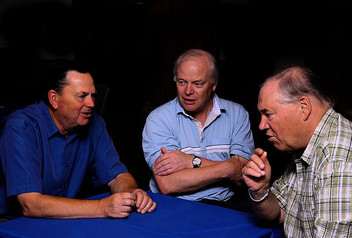
Conflict management cannot be defined as one science. When we relate to conflict — including kidnapping and hijacking — we use a variety of resources. Logic, reason and insights from life experience are important. Depending on context we may also draw on sociology, anthropology, history, political science, law, economics and more.
The extensive literature on conflict management draws largely on non-scientific observations and experiences combined with logic and reason. However, one highly relevant science is poorly represented.
Social psychology: an under-utilized science
Whenever there is conflict, a variety of psychological factors are in play. Some are individual, based on our emotional and cognitive make-up, and can be difficult to identify. But many factors are common to human interaction. These are described in social psychology — the science of how we influence each other. It offers knowledge that can be used constructively in most human communication.
Whether we are involved in an international conflict, a kidnapping or a dispute between spouses, the interaction involves psychological influence. To the extent we understand those influences, we can use them to resolve conflicts, improve relationships — or, in a kidnapping, survive.
This is about applying research findings well documented in social psychology literature. What is largely missing from both conflict management and psychology literature is how these findings can be used in conflict. Lead trainer Olav Ofstad aims to make a difference here, presenting research findings that work as effective conflict resolution and survival tools.
What kind of tools are we talking about?
A full presentation exceeds the scope of this website, but here are some real-life examples.
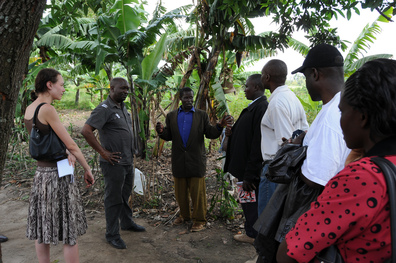
Role expectations
A UN refugee camp in Africa was being plagued by thefts. The camp manager considered it obvious that the culprits were a gang of unemployed young men who hung around the camp. She took a chance and employed the whole gang as guards. She told them about the problems the thefts were causing the humanitarian work, and that she depended totally on their help to solve the problem. They received a decent salary and food, and she followed up with praise and acknowledgement and demanded respect for them among the camp's residents. Thefts dropped to almost zero. What the camp manager did was draw on the power of role expectations — a mighty factor of influence if we know how to use it.Olav Ofstad, Conflict Management in International Peace Operations
Similarity
In May–July 2009 the MV Victoria, a German ship with a Romanian crew, was hijacked off Somalia for 75 days. During the assault phase, this dialogue took place between a hijacker and Traian Mihai, the Romanian chief mate:"Chief, today I'm going to kill the whole crew."
"Why? Why you gonna kill me? I am on board this ship working for a German company to make money. I have wife and children to support. You understand?"
"Yes, Chief."
"You are a pirate. Why'd you capture this ship? For money, no?"
"Yes, Chief."
"Then Romanian and Somali, we're the same, no?"
"Okay, Chief. I'll kill the Germans instead."
Reciprocation
During World War I, some soldiers were trained to capture enemy soldiers and bring them back for interrogation. A German expert at this once sneaked up on a victim in a trench undetected. But the victim, who had a piece of bread in his hand, spontaneously gave it to the German soldier. This surprising gift left him unable to carry out the abduction, and he returned to the wrath of his superiors. The allied soldier was saved by reciprocation — a common human act that can be a useful tool in conflicts.Robert Cialdini, Influence: Science and Practice, HarperCollins, 1993Cognitive dissonance
Researcher François Bizot, held hostage by the Khmer Rouge (see Kidnapping), was once moved blindfolded between camps, guided by a guard whose coarse, sweaty grip on his elbow he found unpleasant. As the kilometres passed, the contact grew gentler, until it became a subtle, silent bond between them. What changed the guard's grip? Most likely cognitive dissonance — a powerful mechanism that is easy to use to your advantage once you have learned how.François Bizot, The Gate, Vintage Books, 2002These examples are picked from a variety of psychological influence tools. Sometimes we use them by intuition, talent or luck — but we cannot trust ourselves to draw on them unless we understand how they work.

The Stockholm syndrome
A phenomenon often discussed in kidnapping theory is the Stockholm syndrome, related to cognitive dissonance: the close relationship and loyalty kidnap victims may come to feel towards their captors. It is not a tool, but it may still save your life — while influencing your personality in ways you do not want. Despite our knowledge of this challenge, there appears to be little adequate training on handling it in a kidnapping.
Kidnapping Survival's training integrates the best of traditional conflict management theory with psychological tools for conflict resolution, better relationships and survival. The principles are presented in Olav Ofstad's books Conflict Management in International Missions. A Field Guide and Conflict Management in International Peace Operations: A Handbook for Officers and Soldiers — the latter, with a chapter on kidnapping survival, is today only available to participants in our courses and workshops.
Secure your consultation today
Global threats evolve — so must your preparedness. Book a Zoom consultation for a risk briefing and a tailored training plan, and pay securely online with PayPal.